Sustainability
Why have you been
buying a wooden box?
Every home built before this was a wooden box that someone else designed, finished, and decided for you. You paid for it at mortgage rates, renovated it at mortgage rates when it stopped fitting your life, and eventually sent it to landfill. Nobody asked what you wanted. The system just handed you the box.
Once you see it — really see it — it doesn't look like a home anymore. It looks like a bad deal that everyone accepted because nothing better existed. A timber frame with a fixed interior, financed over 30 years, destined for demolition. The most expensive thing most people will ever buy, designed from the start to become waste.
Anyplace was designed to end all three problems simultaneously. The waste. The inflexibility. The cost of change. Not as a policy program or a subsidy scheme — as a product that makes the better choice the only choice available.
Your choice
The interior is yours.
Nobody else's.
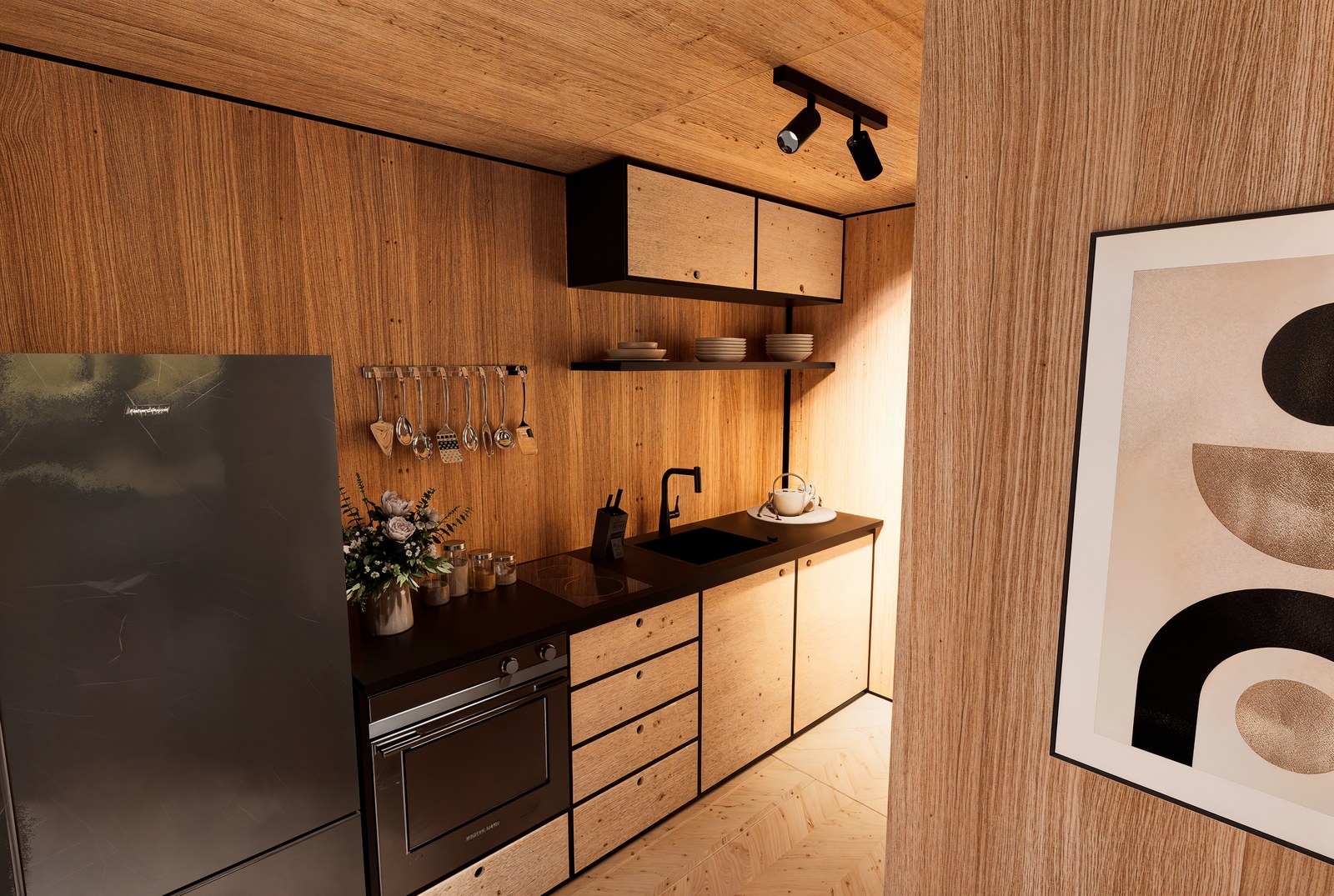
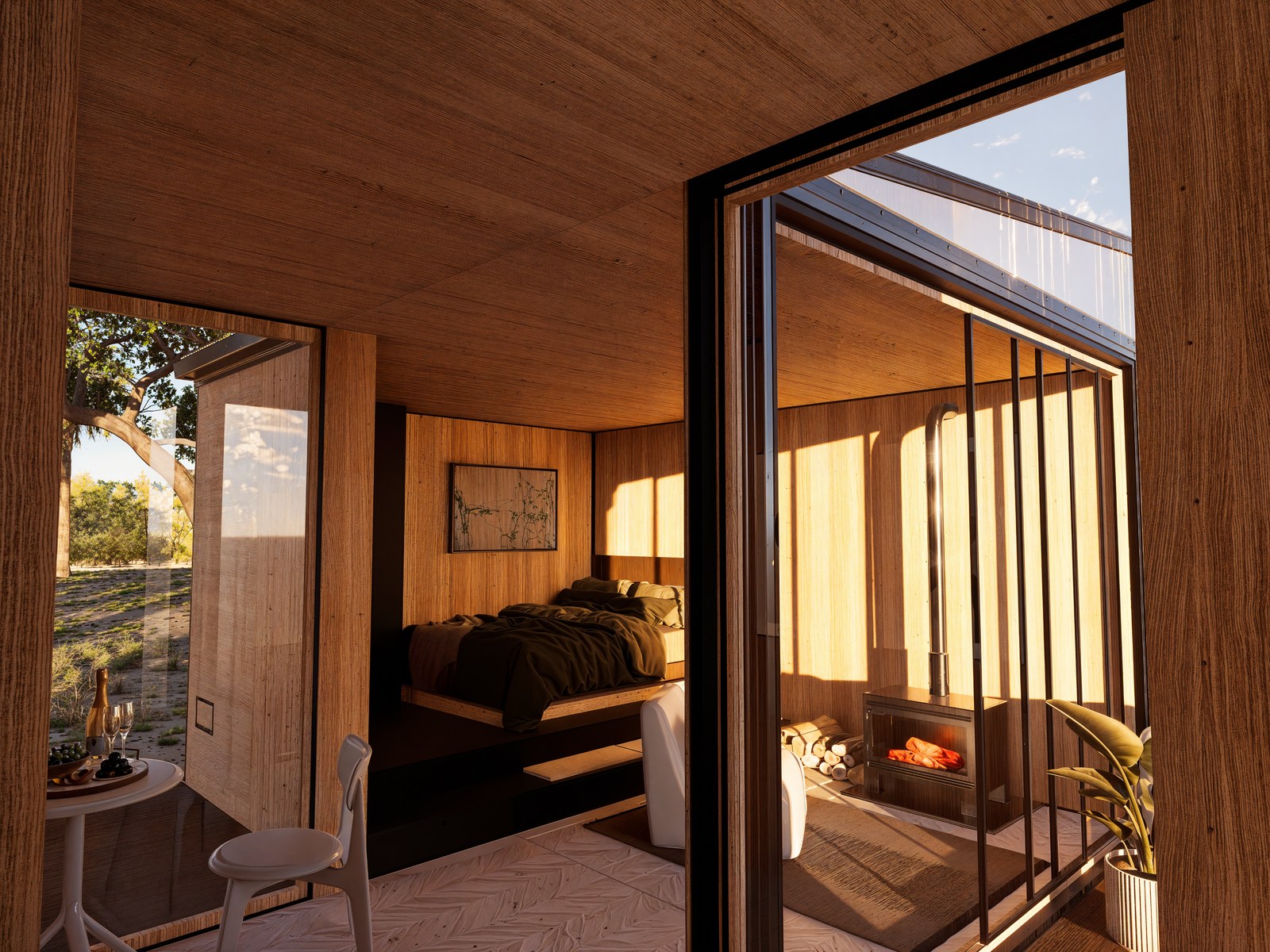
For the first time in any housing product, the interior genuinely doesn't care what you do with it. The aluminum superstructure is neutral. The Payload system adapts to any aesthetic, any function, any personality, any stage of life.
Star Wars. Hello Kitty. Minimalist concrete. Biophilic jungle. A recording studio. A professional kitchen. A home office. A photography studio. A creative workspace. The structure doesn't judge. The interior is yours — to design, to change, to reconfigure, to sell, and to take with you when you move on.
This is what sustainability actually looks like at the human scale. Not a product you're forced to replace every decade because it can't adapt. A product designed to track your life — configured to the person you are at 25, reconfigured for the person you are at 45, and still performing for the person you are at 75.
The problem with what came before
The construction industry
was never designed to stop wasting.
Every renovation starts with a skip bin. That's not an accident — it's the model. The conventional building industry profits from demolition and replacement. Kitchens are designed to be torn out. Walls are designed to be knocked down. Interiors are designed to become landfill. Nobody in the supply chain benefits from a building that lasts, adapts, and recovers its own value.
US construction waste annually
600M
tons. Nearly a quarter of the entire US waste stream. Growing every year.
Landfill tipping fee
$65.84
per ton. Up 10% in 2024 alone. Every demolished building is a disposal liability.
Anyplace material recovery
98%
Measured across a completed 10-unit production run. Not projected — measured.
Anyplace landfill contribution
~2%
Adhesives and cladding mineral fill only. The structural system is 100% recoverable.
The timber frame in a conventional home is not recyclable in any meaningful sense. When it's demolished, it goes to landfill. When it burns in a wildfire, it's a disposal cost. When a hurricane destroys it, the debris bill runs to hundreds of millions. Every conventional building ends its life as a problem for someone to pay for.
An Anyplace module ends its life as a resource. The aluminum recovers into the supply chain. The panels go to a second use before they become scrap. Even a module destroyed by a tornado or a wildfire has a commodity value — the pile of aluminum is worth money, not a disposal bill.
A new methodology
Design for Industrialization.
Not Design for Manufacture.
Most modular construction uses Design for Manufacture and Assembly (DfMA) — optimising the production process, but still ending in demolition and landfill. Anyplace uses Design for Industrialization (DfIND) — a fundamentally different philosophy that treats the end of life as a design constraint from the beginning.
Maximized recycled content
The system starts with 70% minimum recycled aluminum — produced on existing North American extrusion infrastructure using hydropower energy. The material begins its life with embodied value, not embodied waste.
Design for Disassembly
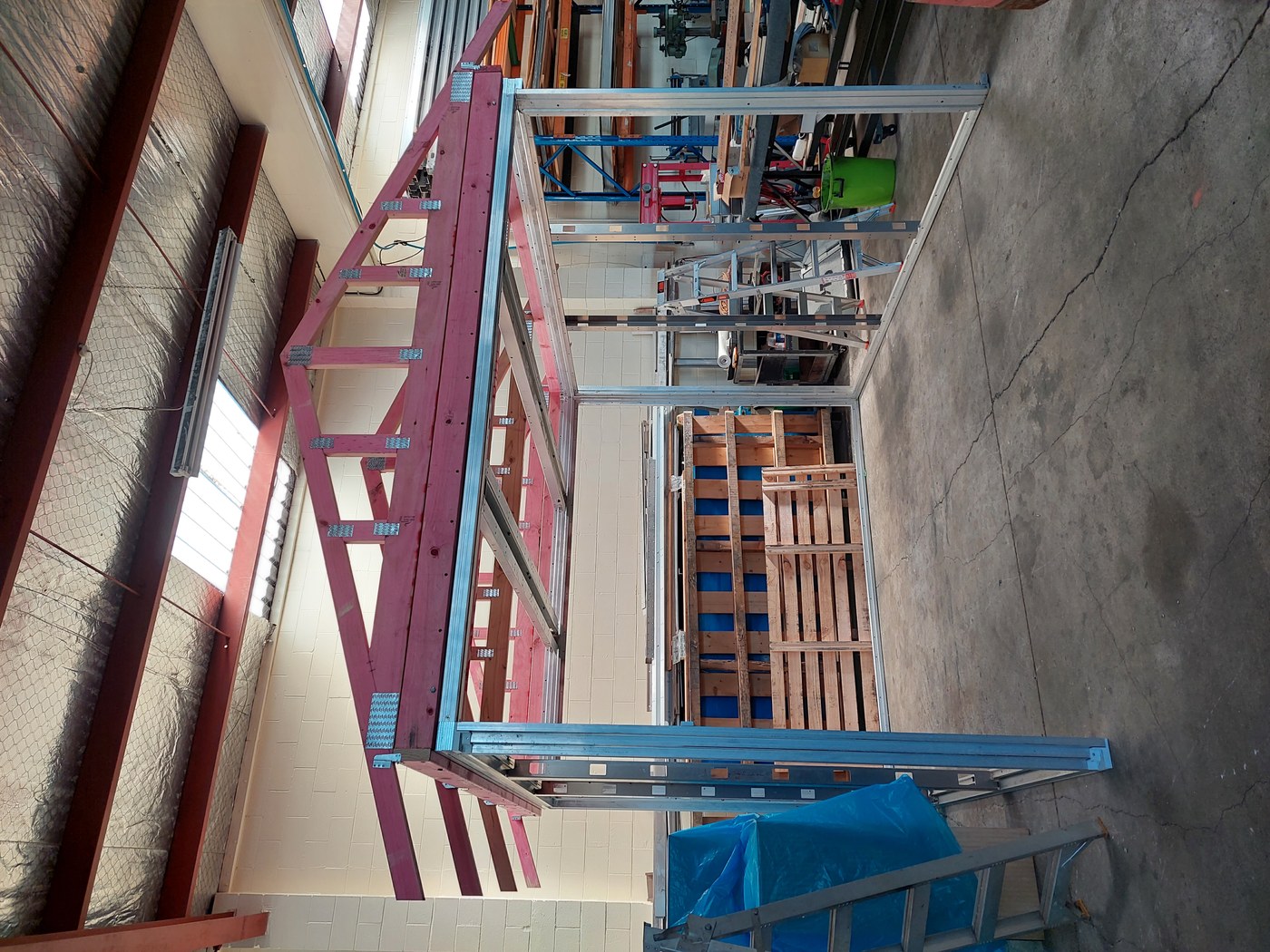
Every connection in the system is designed to be reversed. The module assembles in a day and disassembles in 3.5 hours — two people, eight tools. Nothing is bonded, welded, or permanently fixed except the four structural corner connections.
Materials circularity
At end of life, 98% of the module returns to the aluminum supply chain. Interior panels enter a secondary use stream — construction fencing, concrete formwork — before returning to material recovery. Nothing goes directly to landfill.
Subassembly logic
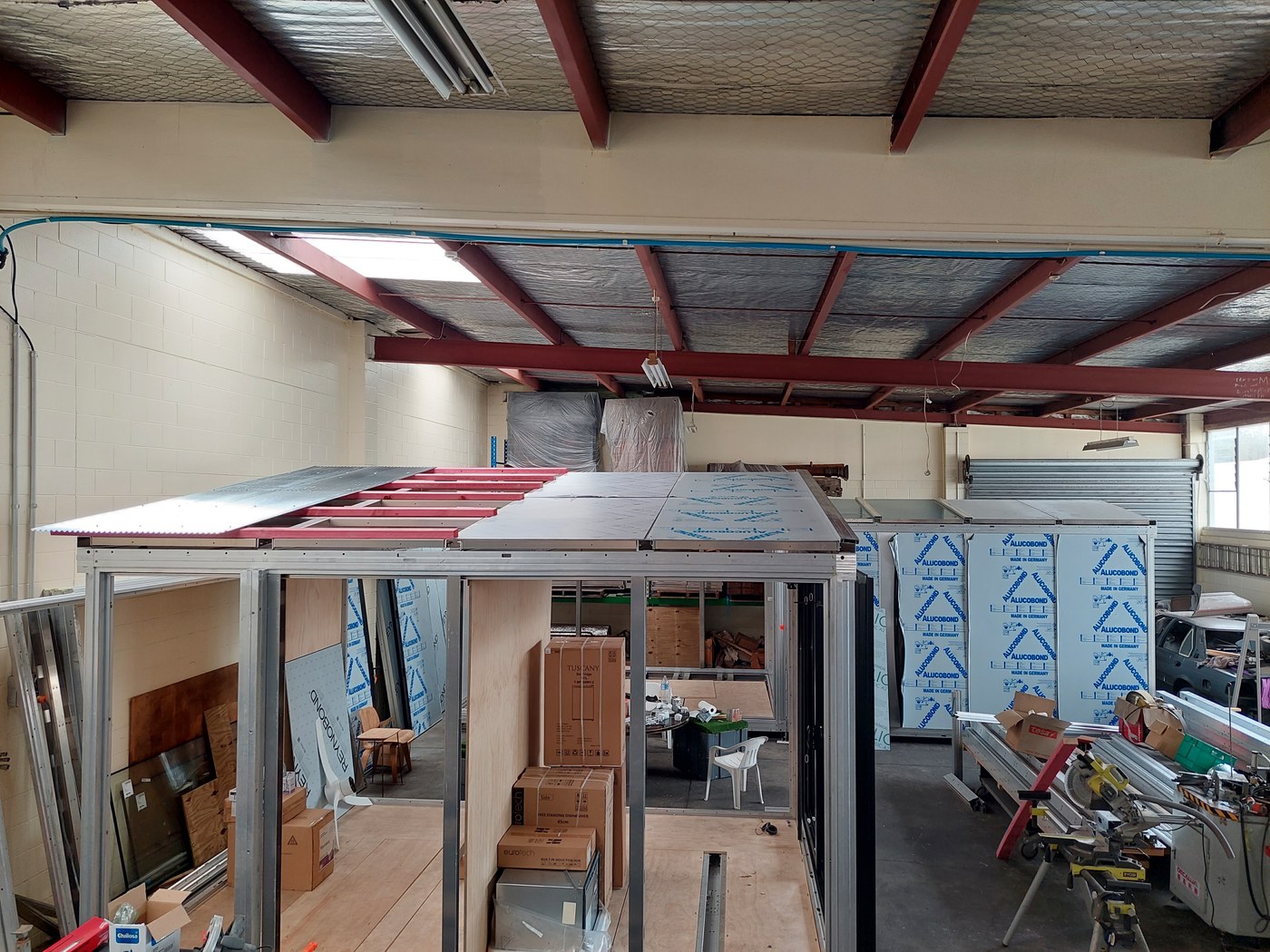
The system is designed for subassembly — components are prepared and treated before arriving on site, reducing on-site waste, skill requirements, and construction time. Two people. One day. No crane.
Materials evolution
The aluminum frame is material-agnostic at the cladding level. Timber, steel, composite panels, recycled materials — whatever the local supply chain offers, whatever the owner prefers. The system bridges conventional construction and the future simultaneously.
Repurposed uses
A module that has served as a home can become a classroom, a medical room, a command post, or a commercial space. The Payload interior reconfigures in hours. The structural frame is permanent and function-agnostic.
The land argument
Designed for land — because land is the only housing asset that can actively reduce its own carbon cost.
A multifamily tower is marketed as sustainable because it is dense. But full-boundary accounting tells a different story. The occupants have no land. Every calorie arrives wrapped in plastic from a supply chain with its own carbon cost. There are no trees assigned to offset the carbon density being produced inside the building. The construction industry inherited this model and never questioned it — because nobody was required to design better.
An Anyplace home on land inverts this. The occupant has soil. They can grow food — reducing packaging, food miles, and supply chain carbon. They can plant trees that actively sequester carbon on their own land. Whether they do is their choice. The capability is built in by design — because the land is theirs, and it stays theirs across their entire life.
The Divergent Resource Logic framework
The carbon performance of an Anyplace module is calculated under the Divergent Resource Logic (DRL) full-boundary accounting framework — the only methodology that accounts for the complete material lifecycle including end-of-life recovery. The framework challenges conventional carbon accounting that treats short-rotation timber harvesting as carbon-neutral and ignores the full boundary of what construction actually costs the atmosphere. The DRL Codex v4.3.0 is published and auditable at fullboundarycarbon.org.
The bridge
Working with what exists.
Building toward what's next.
Anyplace doesn't ask the construction industry to change everything at once. The aluminum superstructure accepts timber, steel, and every conventional trade without retraining anyone. A carpenter clads it. A plumber services it. A roofer roofs it with whatever system they already know. The system is a bridge — between the methods builders know today and the buildings the future requires.
The long-term vision is this: an Anyplace module bolts directly onto an existing conventional home as a permanent addition. The cladding matches. The roofing matches. From the street you can't see the join. Homeowners add space without demolishing anything. Builders work with familiar materials and familiar methods. The construction industry evolves without being threatened.
Ready?
The first US production run
is being planned now.
Register your interest to be among the first to know about availability, pricing, and financing options in your area.
Register interest
How it's built